

En Isère, la forêt représente 38 % de la surface du département. C’est un lieu où de nombreux usages cohabitent : sports de nature, chasse, exploitation forestière, etc. Mais alors, comment garantir une bonne entente entre toutes et tous dans les espaces forestiers ? On a la réponse : adopter les bons comportements ! On vous donne sur cette page nos trucs et astuces.
Suite à des conditions météorologiques difficiles (vents forts, orages, pluies intenses), la forêt peut être fragilisée. Certains arbres peuvent être cassés, déracinés, secs ou penchés, et représenter un danger pour les usagers. Il arrive également que des arbres restent encroués (bloqués dans d’autres arbres après leur chute) au-dessus de chemins de randonnée. Ces situations peuvent être dangereuses, car ces arbres peuvent tomber à tout moment.
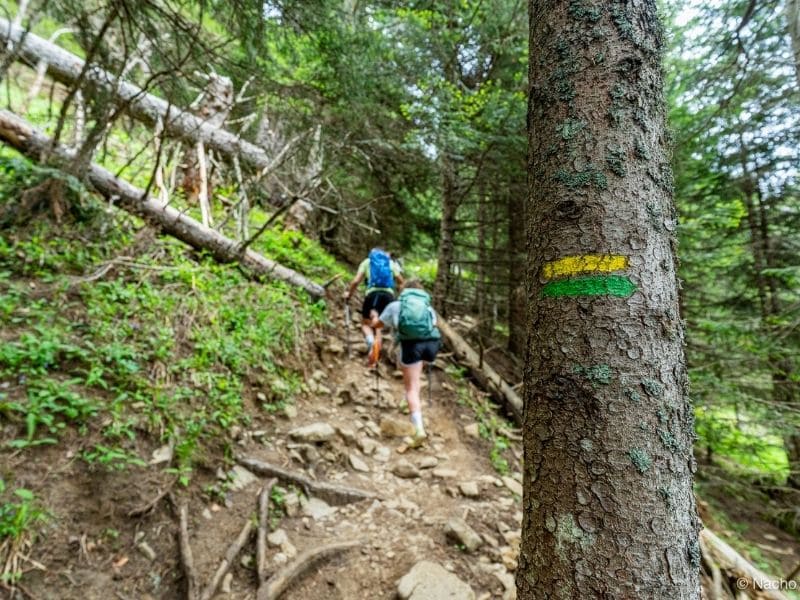
Take the right precautions in windy conditions, as the risk of falling trees or branches is even greater.
- Stay alert to your surroundings when walking in the forest: look out for damaged, broken, uprooted or leaning trees,
- Do not play on fallen trees, as they may be unstable,
- Respect any path closures put in place for your safety.
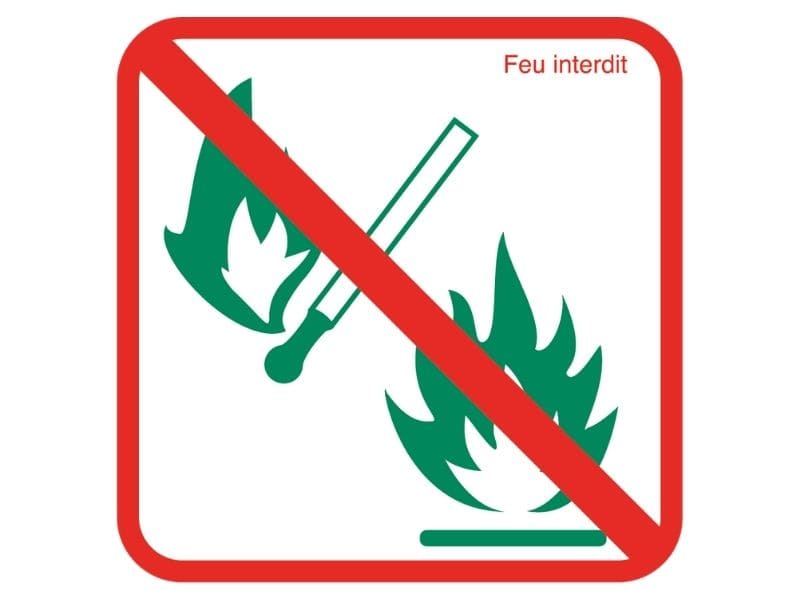
In Isère, the forests are increasingly vulnerable to the risk of fire, particularly during periods of hot, dry weather. Nearly 90 per cent of fires are caused by humans, and one in two fires is linked to carelessness.
To minimise the risks: no fires or barbecues, no cigarette ends left in the countryside, and strict adherence to bans on entering woodland.
In the forest, I might be tempted to set off on an adventure, to discover new horizons, new plants and mushrooms! This is, of course, possible, provided that I leave no trace behind me.
Be aware that there is life beneath your feet! Young shoots need protecting; they contribute to natural regeneration and the forest ecosystem. To avoid trampling them, stay on the paths!
Furthermore, foraging is strictly regulated: find out about local regulations and do not pick protected species!
Wildlife also appreciates peace and quiet; to find out more:
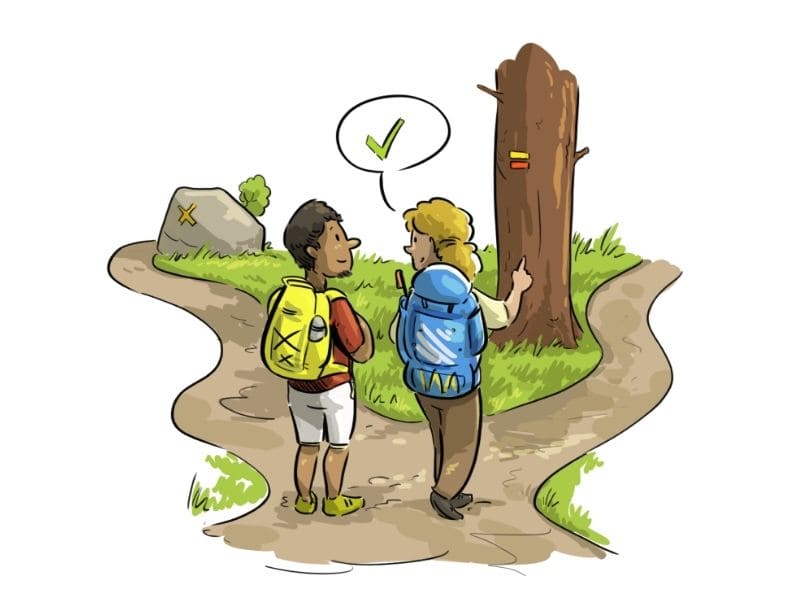
1) For your safety: signposted routes are checked and maintained,
2) To protect flora and fauna: channelling the flow of walkers to the same areas leaves more space for wildlife,
3) To avoid trespassing on private land: 71 per cent of the forests in Isère are privately owned.
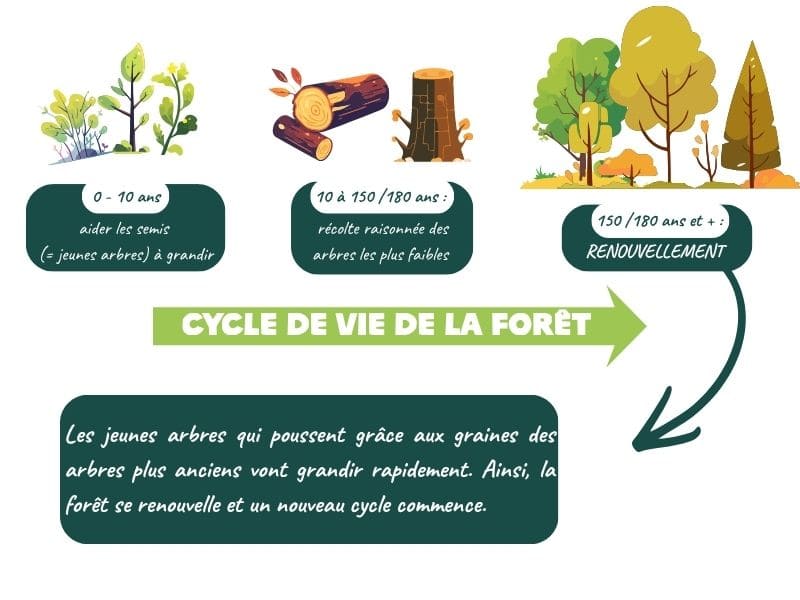
Forests are the result of the work of several generations of foresters. Their sustainable management involves taking carefully considered action throughout the life cycle of the trees, in order to ensure the renewal and balance of the forest.
It is perfectly normal to see forestry machinery and professionals in the forest!
It may seem surprising – you wouldn’t expect to come across a huge machine whilst out in the countryside.
Forestry operations are part of the cycle of sustainable forest management. This approach is designed for the long term and incorporates the concept of multifunctionality:
- Supplying timber to society
- Preserving biodiversity and water quality
- Protecting against natural hazards
- Welcoming the public
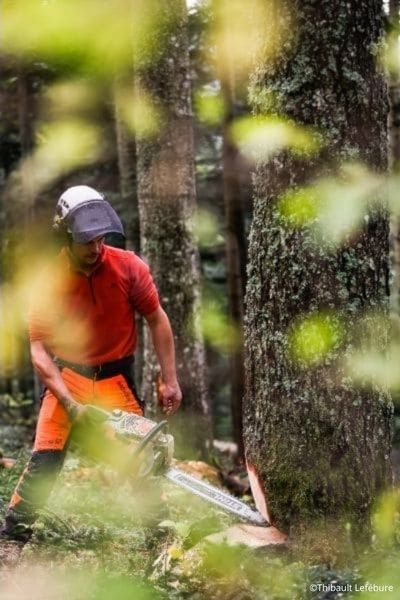
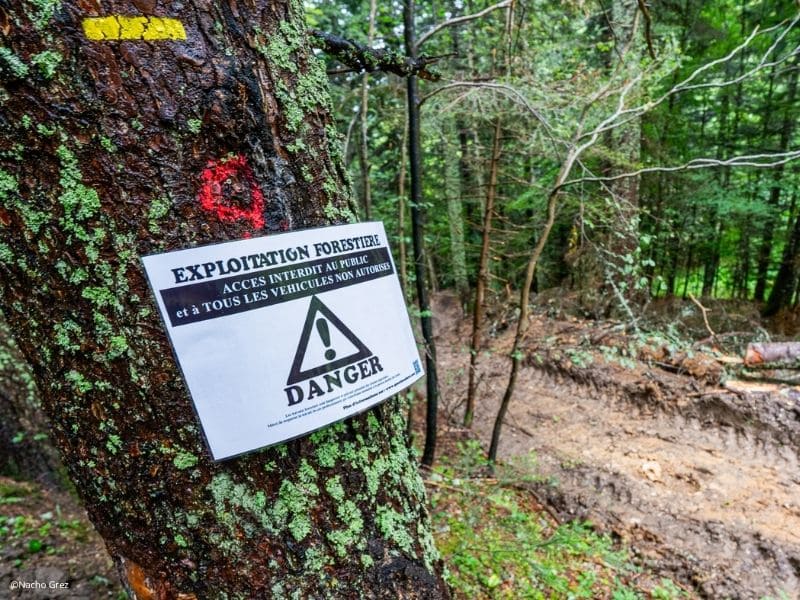
Forests are multifunctional spaces: they welcome the public but are also the workplace for many professionals in the forestry sector.
A forestry site can present significant risks: falling trees and rocks, machinery in operation, and landslides. The sound of a chainsaw or a tractor usually means that felling is taking place.
As with work in town or on a building site, a forestry site is off-limits to the public. For your safety and that of the professionals, never enter a marked-off area!
Once work is complete, piles of timber are temporarily stored along the tracks. For your safety, do not climb on them. They are slippery, they roll, and they are heavy: it is very dangerous!
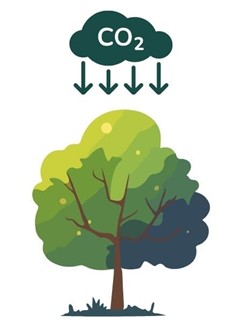
Forests play a vital role in combating climate change:
- Through photosynthesis, trees absorb carbon dioxide (CO?) from the air to grow.
- This carbon is then stored in the wood, roots and forest soils, sometimes for tens or even hundreds of years. Forests thus act as genuine carbon sinks, removing CO2 from the atmosphere.
- Sustainable forest management enables the continued production of timber, a material which also stores carbon when it is processed and used.

the digital trails





The Isère Outdoor application was created
by the Département de l'Isère
Infos & contact
Conseil départemental de l'Isère
7 rue Fantin Latour
CS 41096
38 022 Grenoble cedex 1
Tel. 04 76 00 38 38
 Isère Outdoor - The Forest

